phonetic alphabet
US /fəˈnɛtɪk ˈælfəˌbɛt/
・UK /fəˈnetɪk ˈælfəbit/
A1
n.NounA system of words used to represent letters of the alphabet, especially to ensure clarity in oral communication.
Pilots and air traffic controllers use the phonetic alphabet to avoid confusion.
Video subtitles
4 things to study EVERY DAY to become fluent in English

- but I would say that the best place to start is the IPA, the International Phonetic Alphabet.
but I would say that the best place to start is the IPA, the International Phonetic Alphabet.
- to start is the IPA, the international phonetic alphabet.
to start is the IPA, the international phonetic alphabet.
Start a language from scratch (the natural way)

- So the thought I would leave you with is try to think of starting a new language in terms of not that you're going to deliberately learn a list of most frequent words or you're going to deliberately read this explanation using the International Phonetic Alphabet, which I never use, you're just going to listen and get used to it.
So the thought I would leave you with is try to think of starting a new language in terms of not that you're going to deliberately learn a list of most frequent words or you're going to deliberately read this explanation using the International Phonetic Alphabet, which I never use, you're just going to listen and get used to it.
- So if you like the International Phonetic Alphabet, by all means, if you prefer reading, by all means, if you prefer reading grammar rules, by all means, do all those things that are going to keep you motivated, make sure you know why you're learning the language, make sure you know the kinds of activities that will keep you motivated, and as long as you remain active in the language, you are going to accumulate this sort of database of reference so that you can start inferring with more and more accuracy when you hear the language and when you go to use the language.
So if you like the International Phonetic Alphabet, by all means, if you prefer reading, by all means, if you prefer reading grammar rules, by all means, do all those things that are going to keep you motivated, make sure you know why you're learning the language, make sure you know the kinds of activities that will keep you motivated, and as long as you remain active in the language, you are going to accumulate this sort of database of reference so that you can start inferring with more and more accuracy when you hear the language and when you go to use the language.
How to pronounce ‘A’ in English (It's not that easy!)

- the dictionary would show it to you according to something called the IPA: International Phonetic Alphabet, which I highly recommend you download somewhere.
the dictionary would show it to you according to something called the IPA: International Phonetic Alphabet, which I highly recommend you download somewhere.
- The dictionary would show it to you according to something called the IPA, International Phonetic Alphabet, which I highly recommend you download somewhere.
The dictionary would show it to you according to something called the IPA, International Phonetic Alphabet, which I highly recommend you download somewhere.
English Sounds - L [l] Consonant - How to make the L [l] Consonant
![English Sounds - L [l] Consonant - How to make the L [l] Consonant](https://img.youtube.com/vi/FP0jHNoFqWo/hqdefault.jpg)
- But if you look up a word in the dictionary, there's only one international phonetic alphabet symbol for both kinds of L.
But if you look up a word in the dictionary, there's only one international phonetic alphabet symbol for both kinds of L.
- there's only one International Phonetic Alphabet symbol for both kinds of L.
there's only one International Phonetic Alphabet symbol for both kinds of L.
Sound more natural in English: Learn and practice 5 FRONT VOWELS
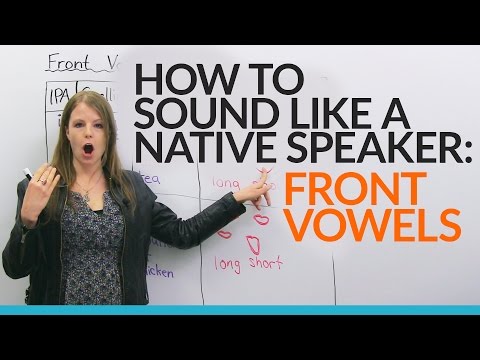
- which stands for International Phonetic Alphabet.
which stands for International Phonetic Alphabet.
- So, you might be wondering: "Oh, why is this an "I" if it's an "E" sound?" Well, I have here different characters from the IPA, which stands for: International Phonetic Alphabet.
So, you might be wondering: "Oh, why is this an "I" if it's an "E" sound?" Well, I have here different characters from the IPA, which stands for: International Phonetic Alphabet.
Pronunciation - Silent T: often, listen, castle...

- Phonetic Alphabet, I have the different spellings that the dictionary says are okay for the
Phonetic Alphabet, I have the different spellings that the dictionary says are okay for the
- pronunciation of this word, okay? And if you don't know the International Phonetic Alphabet,
pronunciation of this word, okay? And if you don't know the International Phonetic Alphabet,
American English Diphthongs - IPA - Pronunciation - Interntional Phonetic Alphabet

- they make the 'ay' as in 'say' diphthong sound. This is why the International Phonetic Alphabet
they make the 'ay' as in 'say' diphthong sound. This is why the International Phonetic Alphabet
- What is the International Phonetic Alphabet? It's a system of phonetic notation, and I
What is the International Phonetic Alphabet? It's a system of phonetic notation, and I
American English Vowels - IPA - Pronunciation - Interntional Phonetic Alphabet

- Phonetic Alphabet makes it easier to study the pronunciation of a foreign language. This
Phonetic Alphabet makes it easier to study the pronunciation of a foreign language. This
- What is the International Phonetic Alphabet? It's a system of phonetic notation, and I
What is the International Phonetic Alphabet? It's a system of phonetic notation, and I
American English Consonants - IPA - Pronunciation - International Phonetic Alphabet
- This is why the International Phonetic Alphabet makes it easier to study the pronunciation of foreign languages.
This is why the International Phonetic Alphabet makes it easier to study the pronunciation of foreign languages.
- What is the International Phonetic Alphabet?
What is the International Phonetic Alphabet?
The International Phonetic Alphabet
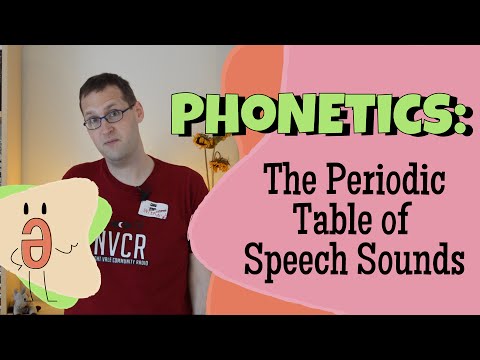
- It’s called the International Phonetic Alphabet, or IPA.
It’s called the International Phonetic Alphabet, or IPA.
- It's called the International Phonetic Alphabet, or IPA.
It's called the International Phonetic Alphabet, or IPA.